
Remote Patient Recruitment Methods in Clinical Trials, Discover the advantages and challenges of recruiting patients remotely.
Patient recruitment and retention are one of the biggest challenges in trial progression along with other reasons such as inadequacy in documentation practices and suboptimal knowledge about regulatory guidance. Studies have shown that patient recruitment is the single highest cause of trial delays with 80% of trials failing to meet their initial enrollment targets. Due to the monumental cost associated with the conduct of trials, the inability to recruit sufficient participants can lead to massive delays in terms of timelines that further compound operational costs. The statistical power of a study depends on a minimum number of patients that are necessary to demonstrate that the experimental treatment is clinically superior, equivalent, or non-inferior to the standard treatment such that recruiting a suitable number of patients is pivotal to the success of a trial. Thus, Patient recruitment mobile application is one of the key factors for conducting a trial.
Traditional methods of patient recruitment are based on identifying a suitable pool of participants based on various demographic criteria such as age, gender, co-morbidities, ethnicity, etc. as well as disease stage which is documented in the trial protocol. Various approaches such as advertisements in print media such as advertisements and articles in newspapers, physician referrals, outpatient and acquaintance referrals, community posters and newsletters, patient support groups, and telephone and television interviews are used to identify potential participants. The process of recruitment encompasses identifying suitable participants, discussing all aspects of the trial, obtaining informed consent, conducting physical examinations, and screening, and finally enrolling the participants in the trial. Despite the wide variety of methods that have been used to find participants, most sites fail to enroll sufficient patients or sometimes even one! The solution to this problem lies in the fact that most sponsors and site investigators are not able to identify patients in an appropriate way. The permeation of mobile technology globally and in the lives of people from most social strata needs to be taken advantage of. People are used to finding the information that they want at their fingertips such that using digital platforms and social media may prove to be one of the best ways to recruit participants. The rising popularity of virtual, siteless, and decentralized approaches to clinical trials further lends to the ability for remote patient recruitment strategies.
Remote Patient Recruitment Methods:
Remote patient recruitment is based on using online digital platforms and electronic methods to identify patients based on demographics that are identified in the trial protocol. Following patient identification, eConsent solutions and electronic signatures are used to obtain informed consent from the patients, and electronic learning platforms and training programs can be used to educate the patient and answer their trial-related queries. Telemedicine platforms and wearable devices are used to connect participants with physicians and investigators and obtain information on vitals that can decide enrollment of participants in a trial. Figure 1 shows the various methods used for remote patient recruitment clinical trials.
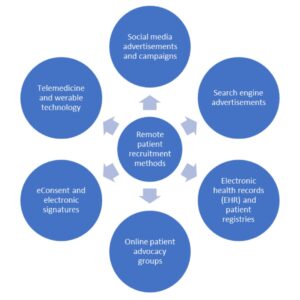 Figure 1. Remote patient recruitment platforms and technologies
Advantages and Challenges of Remote Patient Recruitment
Remote patient recruitment offers a myriad of benefits in addition to the ability to recruit enough participants for trial initiation. The various advantages of remote patient recruitment include:
- Greater diversity and inclusion in the participant pool due to the ability to penetrate through various socioeconomic backgrounds allowing for a better reflection of the real-world scenario
- Improved patient engagement application and retention due to increased involvement of participants in the trial and their own health and a better understanding of the trial procedure and benefits and risks associated with it
- Reduced costs associated with patient visits and monitoring at sites leading to a decrease in site staff costs and operational expenses
- Patient convenience and comfort due to the elimination or reduction in travel costs and time
- Faster enrollment that decreases everyday trial-related operational costs due to a wider patient population
- Attraction of new and untapped patient populations that live in remote areas
- Incorporation of patient-centricity by allowing for patient involvement and feedback
Despite the advantages to patients and healthcare providers, remote patient recruitment has certain disadvantages that need to be overcome to benefit fully from this digital method of enrolling participants in clinical trials. Some of the challenges with remote recruitment are:
- Lack of digital literacy which is particularly relevant for the elderly population
- Reduced in-person and face-to-face interactions between patients and healthcare providers which leads to reduced human connection leading to some psychological discomfort
- Need to develop suitable training programs on the use of digital platforms and maximize the benefits associated with online platforms
- Limited availability of mobile devices or stable internet connections especially in rural areas can interrupt the recruitment process and trial progression
Therefore, developing suitable recruitment strategies for remote enrollment is critical in meeting trial goals and ensuring economic feasibility. Digital and online platforms can help meet enrollment targets and are increasingly deployed in decentralized clinical trials. Further work is necessary to increase accessibility and operational efficiency to enable the widespread uptake of these remote technologies.
References:
- An-evidence-based-approach-to-conducting-clinical-trial-feasibility-assessments.pdf (openaccessjournals.com)
- Recruitment and retention of participants in clinical studies: Critical issues and challenges – PMC (nih.gov)
- Recruitment and retention of the participants in clinical trials: Challenges and solutions – PubMed (nih.gov)
- Online Patient Recruitment in Clinical Trials: Systematic Review and Meta-Analysis – PMC (nih.gov)